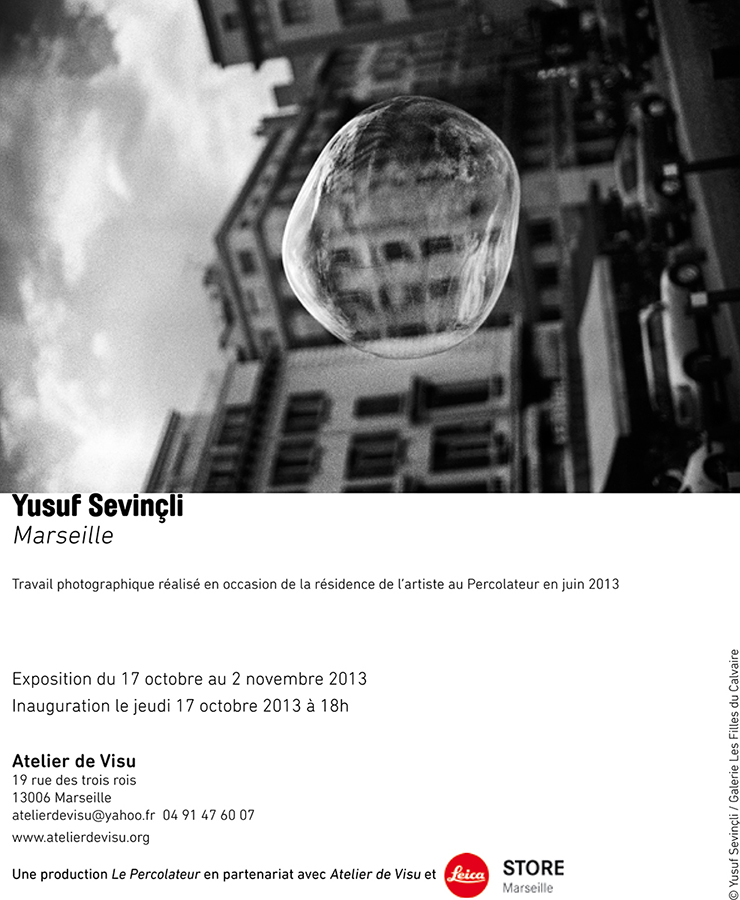
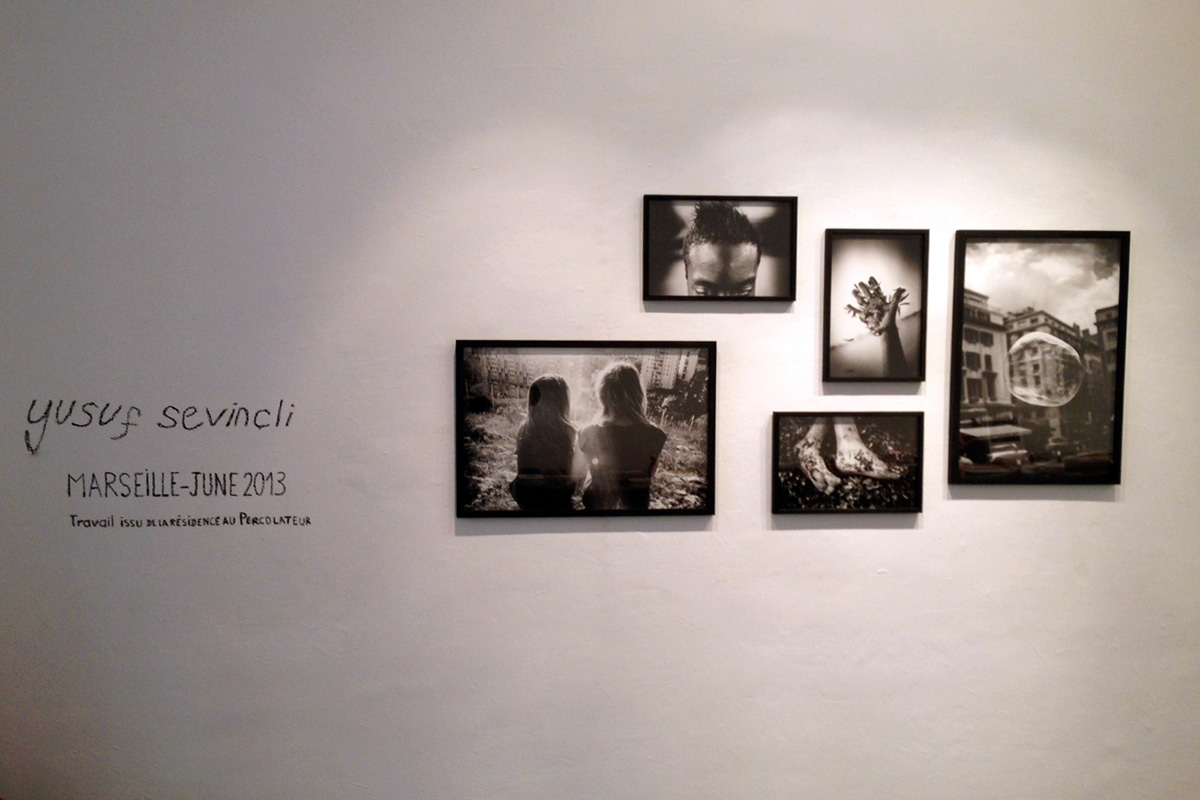
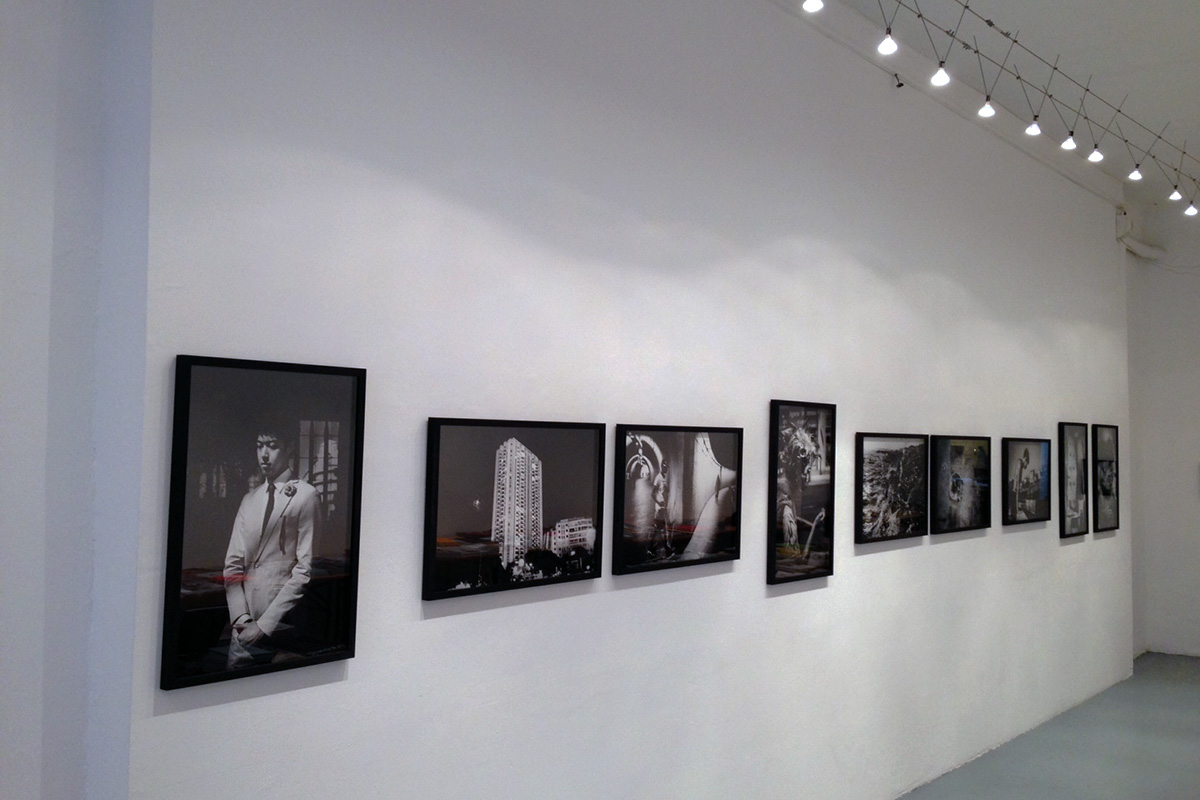
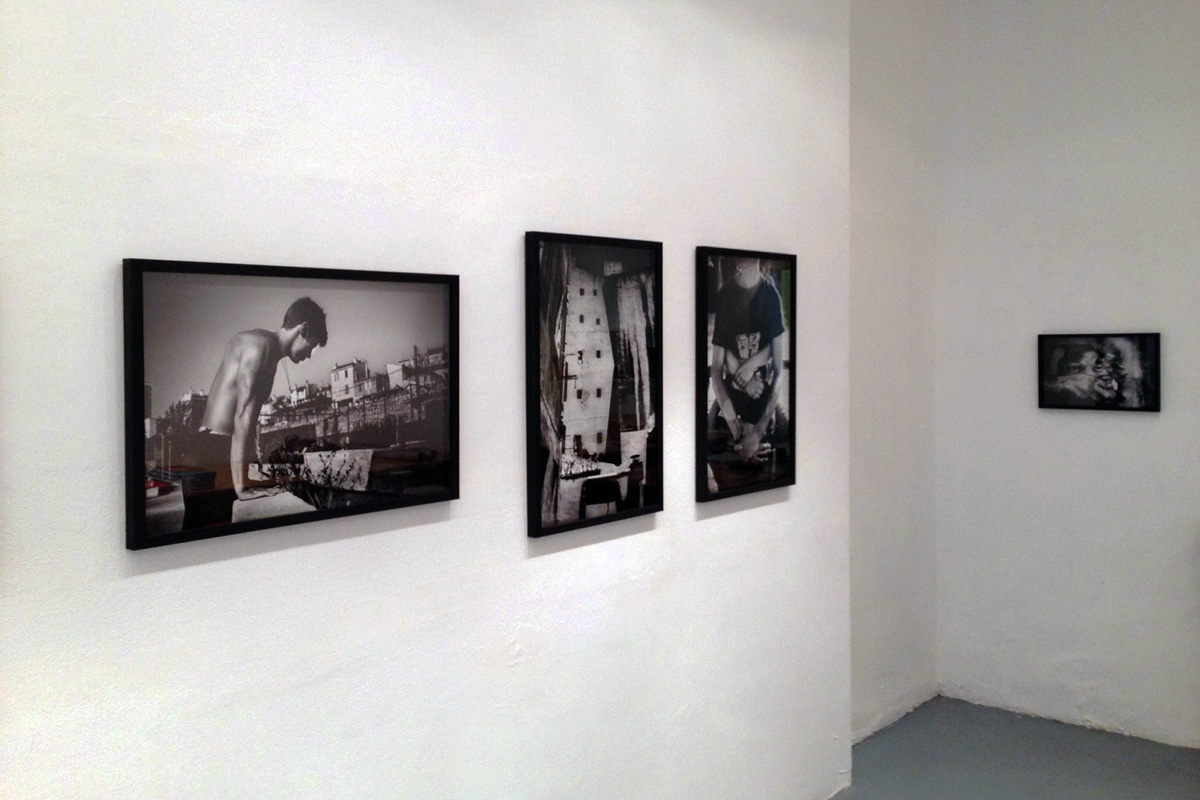
Exhibition; 'Marseille' at atelier de visu
Text by Christian Garcin on 'Marseille', October 2013
The Muffled Sound of Raised Voices;
Anyone who grew up in Marseilles knows how much life in this city takes
place for the most part far from the generally accepted, although actually
quite recent, images of sunny, Pagnol-like scenes, loquacity, afternoon naps
and laughter in cafes. Before being a destination for tourists keen to be lulled
by the sound of waves lapping on the shore as, a glass of rose in hand, they
boost their melanin levels (non-activities that are nevertheless respectable),
the Mediterranean area had always been a place of tragedy, cutting shadows,
secrets, and harsh fates: for confirmation, you only have to read the writings
of Greeks from either Greece or Turkey – the native lands of those sailors
who founded Massalia twenty-six centuries ago. Or else, you only have to live
in Marseilles. Tacitus said of the Marseillais that they combined “the
politeness of the Greeks with the austerity of the inhabitants of Provence”.
A few centuries later, Joseph Conrad remembered having seen there “sturdy
girls with pure profiles, superb heads of elaborately styled black hair, black
eyes and dazzling white teeth”. (I came across them one evening in a tavern
in Kythira: two tall, rough yet beautiful waitresses with intense eyes, their
prune-black hair tied back in a knot, and their mother, who was sitting to one
side and wearing on her face, in her bearing and in her eyes, the thousandyear-
old tranquillity of theatrical queens as a mask of ancient fatality.)
Marseilles, like a good number of Mediterranean ports, lives in a permanent
and austere state of black and white. The mistral ravages everything, the sea
roars, the sun burns, the sounds, odours and colours lay siege to our senses,
and the shadows are violent, as are people’s lives. I grew up in Endoume, not
far from the Saint-Victor abbey, in a tarmacked cul-de-sac whose inhabitants
had Provencal, Italian or Spanish names. Winters were grey and summers
were blindingly white. I only discovered the colours of the Mediterranean
later, when I studied the history of art. Of the Plage du Prophete where I used
to bathe, I especially remember the white foam of the waves tossed about by
the mistral. The walls of the community school, the tarmac of the cul-de-sac,
our shutters and the neighbours’, the surrounding rocks, the kerbs, my
father’s car, his suit; all of that was grey, or strongly contrasting black and
white. Even the pictures on the television set. Even the photos taken during
that time. Later, I passed through every bit of Marseilles for various
professional activities. I believe I can say that there is not a single
neighbourhood that I did not visit. The dazzlements, the darkness,
the silence and the din of this city accompanied me everywhere I went, from
Callelongue to the Aygalades, from Endoume to Ch‰teau-Gombert, from Roy
d’Espagne to the Plan d’Aou. If there is any consistency in this city, it is
definitely in the extreme intensity of contours, perspectives, lights, odours,
gestures and voices. In Marseilles, all people – and all places – are on their
own front line, presenting themselves with a fiery spirit that’s tinged with
distrust. The pieces of Marseilles’ reality that Yusuf Sevincli picks up are
broken glass on a pavement. They do not form one thematic unit but a torn
fabric, revealing an eye that is both erratic and sharp. What they unveil of
Marseilles is something of all that, which both names the city and also files it
under the label of crude, immediate reality: the fiery spirit and the secrets, the
violent shadows and the dreary streets, the grey concrete blocks, the torn
beaches, the filth, the light, the eternal youth – and always, everywhere, this
hidden anxiety that rises to the surface and reminds us that in Marseilles,
antiquity, with its succession of insanities, curses, retaliations and broken
destinies, is never very far away. The Mediterranean is singular. The sailors who founded Massalia in the 6th century BC had set sail from the Aegean
coast of Turkey. Yusuf Sevincli, for his part, was born on the northern coast
and lives in Istanbul on the Bosphorus Strait, between the Mediterranean and
the Black Sea, and at the crossroads of two worlds and several civilizations. A
man with such a mix of rich cultures was required to detect, beneath the
vaguely flashy contemporary varnish (although in Marseilles nothing remains
so for very long), the harshness of the ancient greyness, the diffuse
uneasiness of certain street corners, the cemented anarchy taking up space
in the middle of creeks, the beautiful violence in people’s eyes, the proud and
feigned carelessness of youth, and the tragic meaning of life that rushes by,
carried along as always by the mistral and the muffled sound of raised
voices.
17.08 - 2.10 2013