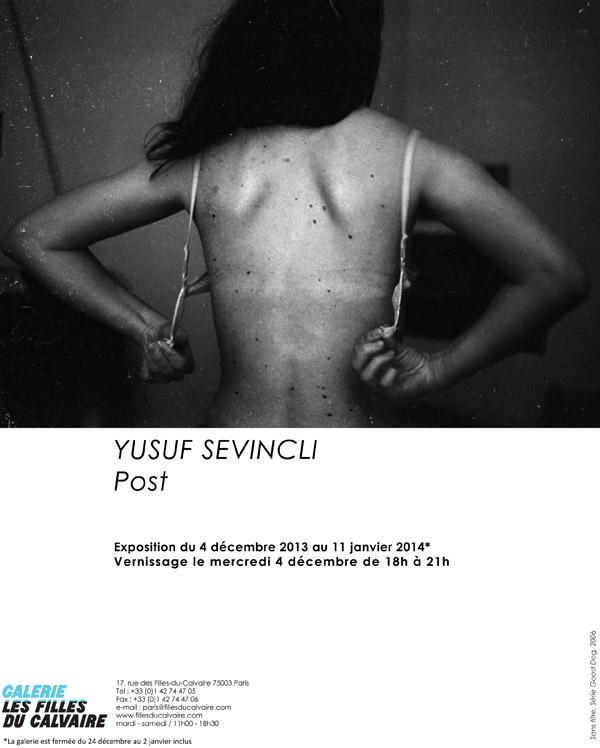
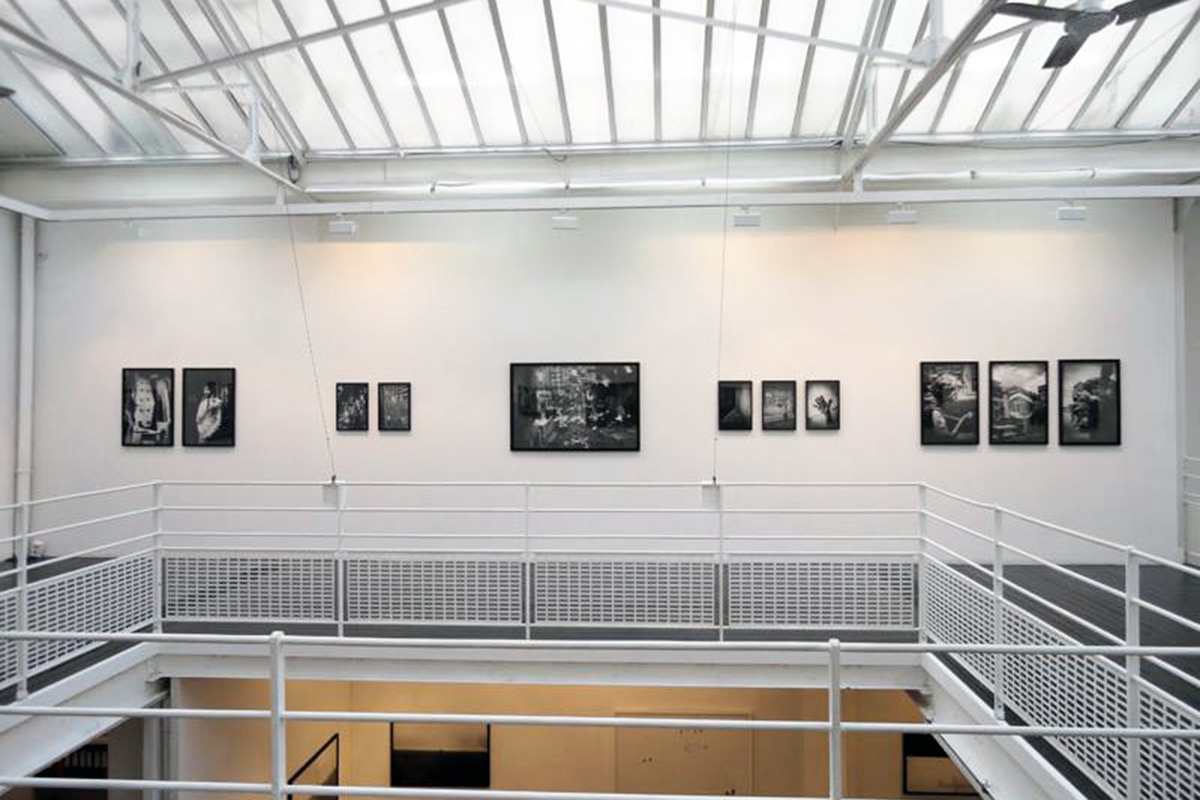
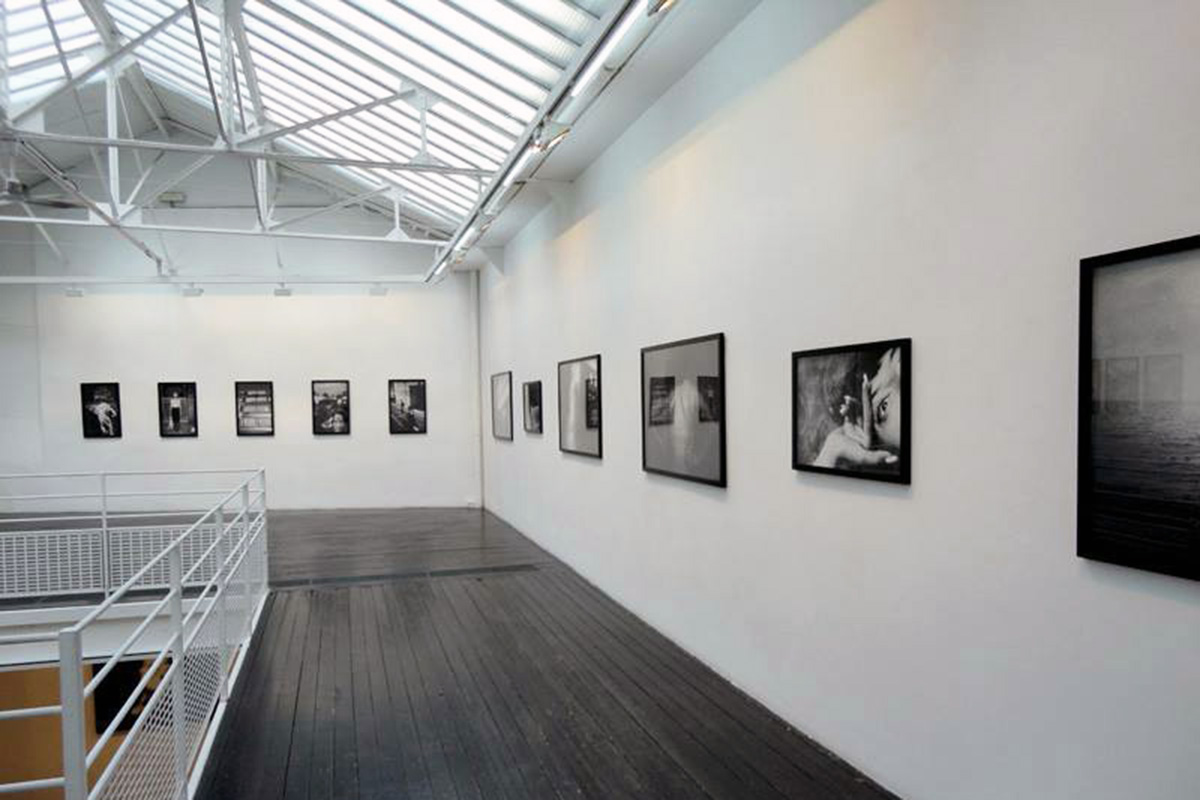
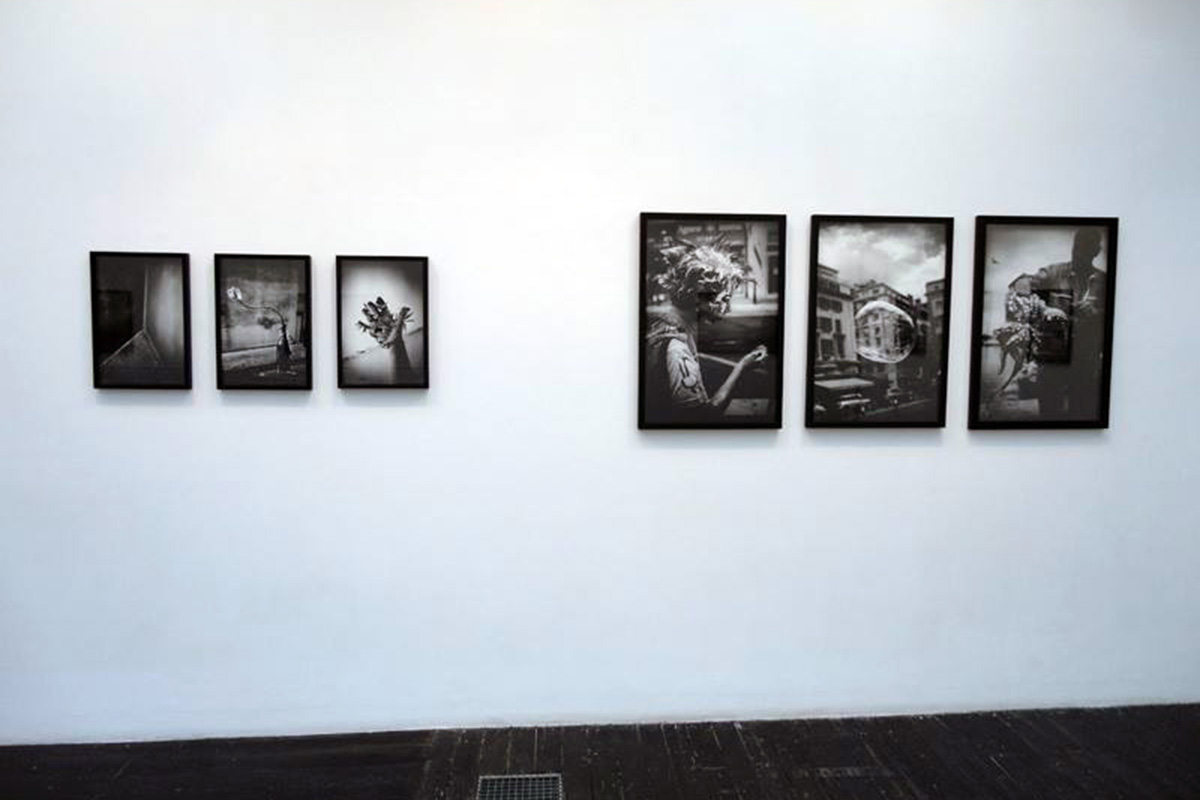
exhibition 'Post', galerie les filles du calvaire
When a traveller just arrived in Istanbul “the Magnificent”, his eyes set on the thousand minarets the city hosts, a swarm that gives rhythm to its vast territory the way the ships do on its seas. Astonished, he will dive into this bustling and rustling of the epic city. From time to time, he might also try and find its contemporary art scene. Istanbul is still far from the market tensions of contemporary art but not necessarily from its preoccupations –it is even quite the opposite. Considering the high number of artists who decide to settle in there, the ancient city is indisputably about to become a leading actor. It already gained international attention for its biennale, for its powerful foundations and refined art centres, its galleries’ dynamic development that altogether offer a varied cultural program. The connoisseur can easily find artworks whose conceptual and political stands remind those of their neighbours, the Lebanese activist1 and artists for example, in the sense that they illustrate the great democratic debates that affect the area. On the opposite hand, one often comes by improbable kitschiness but it is never offensive. It might be a cultural reference to the eastern decors whose patterns and colours Istanbul embodies. On exceptional occasions, one discovers traces of intimate parcels or secrets that allude to the unknown and blend Oriental fragrances with the East the way Paul Bowles’ Tea in the Sahara does. It is no longer a question of orientalist exoticism but rather of a cross-fertilisation that frees contemporary writing practices from their former ties and enables them to moor on new cultural banks. What is more, this coastal navigation now works both ways. If Istanbul has always attracted and still attracts Europeans, giving them cultural food for thought, it has now become the homeland of more and more Turkish or affiliated artists, who gained international renown. It is now the cornerstone of an expanding emerging artistic scene where creative souls come from all around the world and feel sometimes freer than in their own countries. Yusuf Sevinçli is both Turkish and Istanbulite. He arrived in the city as a young student and has lived there for the past fifteen years, surrounded by a community of artists, most of them being photographers with which he shares a common passion for the image. Each of them can be considered as a symbol for the creative fizzing that is typical of this emerging artistic scene. Though their preoccupations and styles are diverse, they share experiences and travels, increasing their knowledge of other cultures with debates, be they intellectual or brotherly. Yusuf Sevinçli’s images have the striking uniqueness of the “survivor”2, in the sense that he gleans pictures by chance and welcomes the most unexpected gifts life offers him. His contrasted black and whites, with thick grain and scratched surfaces, have a timeless dimension that refers to the fleetingness of our everyday life. In a way, those photographs, that do not render the present anymore but rather an imaginary world or an uncertain age, seem lost in time. Clearly, the photographer doesn’t try to depict reality the way it is but offers a subjective point of view on his own world. This emerging artist was influenced and liberated when he found himself included in this contemporary photographic trend that focused on the image3 and took its distance with the photo report or the social documentary. This circle of influence (though it couldn’t be defined as a School and has no real name) supported with ardour numerous artists in France or abroad4. Strömholm, Petersen, d’Agata and others can be associated to it with their dense, crude or even aggressive (considering their subject, at least) images, their surprising choices of framing, or their deep darkness. Other less famous, such as Ali Taptik’s, come to mind. Being one of the figure of this circle of influence in Turkey, his work bears all the darkness the city carries within it, the exacerbated sexuality as well as the faint violence that are part of it. The Turkish photography being quite young, it has some uncertain roots and needs to open up to new foreign inputs and perspectives. This also explains why it is thrilling in its free, enthusiastic and spontaneous dimension. Very diverse works are close to it, in so far as its transgressive nature leads to an easy integration of various references. It is the case for Sevinçli: if his work was developed under Petersen’s auspices, the writing is typically his. In fact, his culture and history supply a quite different universe, unique in its softness and unspeakable sensuality. The image’s relative darkness doesn’t make them morbid or gloomy. On the contrary, they’re open to life. His posture shows much of his desire to preserve his history, keeping it in mind. Hetries to show the vestiges of a very alive culture in a country that goes through changes, showing one of the last typical wooden houses of Istanbul bursting into flames or birds that fly away from a sloping alley flowed with rain, for example. He also pictures this hallucinatory vision of a repair man that doesn’t look like he’s going to get down from his street light and seems to be stuck therefore forever. The umpteenth alleys of Beyoglù where Sevinçli wanders, days and nights,have a nostalgic dimension but the photographic liveliness of his pictures are very contemporaneous. He talks about love on occasions, stops on a body, highlighting a parcel of skin that evokes a sensual fragrance. Some children faces strike us with their enlightened innocence that remind of the Lumière brothers or Chaplin’s images.Masked toddlers playing in alleys and waste grounds, little girls that emerge in images, all are wonders, eternal angels and emblems for the desire to stay young. Their sweet little faces and clever gaze stare at the viewer with candour, the way those almost Siamese young girls do, with their little faces so close to each other. Yusuf Sevinçli also pictures the wanderers and night birds that belong to the diverse and fancy Istanbulite cross-culture. He transforms their bodies into volumes and contrasted tint areas, as he does for the back of this man on which a whitish fluid reminds us of an abstract dripping. He notices details, fragments, the beautiful legs of a punk whose ties are ripped for example, thistles in a vase, a light bulb that hangs from a flaked-off ceiling(…) and offers them a new visual fate. Shapes come out of the shadows, penetrate rays of light and are overwritten by the scratches on the negative, creating prisms and illuminations. Overall, the light structures the images,whose subject can be geometrical: the abstract lines of buildings, the remains of a shelter lost on a lunar beach, the old-fashioned futurist architectures of a decrepit Palais de la Découverte… Yusuf Sevinçli’s images do not necessarily convey a message– or maybe an allusive one–as if he wished to cut himself off political turmoil to focus on what is left of humanity, the way Sergio Larrain’s imagesshed their dazzling pure light6 on the sore future of Chili. This young photographer’s images creat dreams. In his last pieces, his visual wandering broadened to Europe where he now travels. From Napoli to Paris passing by Marseille7, he still looks for a silent world where only the transient swish of life keeps him awake. Christine Ollier July 2013 When a traveller just arrived in Istanbul “the Magnificent”, his eyes set on the thousand minarets the city hosts, a swarm that gives rhythm to its vast territory the way the ships do on its seas. Astonished, he will dive into this bustling and rustling of the epic city. From time to time, he might also try and find its contemporary art scene. Istanbul is still far from the market tensions of contemporary art but not necessarily from its preoccupations –it is even quite the opposite. Considering the high number of artists who decide to settle in there, the ancient city is indisputably about to become a leading actor. It already gained international attention for its biennale, for its powerful foundations and refined art centres, its galleries’ dynamic development that altogether offer a varied cultural program. The connoisseur can easily find artworks whose conceptual and political stands remind those of their neighbours, the Lebanese activist1 and artists for example, in the sense that they illustrate the great democratic debates that affect the area. On the opposite hand, one often comes by improbable kitschiness but it is never offensive. It might be a cultural reference to the eastern decors whose patterns and colours Istanbul embodies. On exceptional occasions, one discovers traces of intimate parcels or secrets that allude to the unknown and blend Oriental fragrances with the East the way Paul Bowles’ Tea in the Sahara does. It is no longer a question of orientalist exoticism but rather of a cross-fertilisation that frees contemporary writing practices from their former ties and enables them to moor on new cultural banks. What is more, this coastal navigation now works both ways. If Istanbul has always attracted and still attracts Europeans, giving them cultural food for thought, it has now become the homeland of more and more Turkish or affiliated artists, who gained international renown. It is now the cornerstone of an expanding emerging artistic scene where creative souls come from all around the world and feel sometimes freer than in their own countries. Yusuf Sevinçli is both Turkish and Istanbulite. He arrived in the city as a young student and has lived there for the past fifteen years, surrounded by a community of artists, most of them being photographers with which he shares a common passion for the image. Each of them can be considered as a symbol for the creative fizzing that is typical of this emerging artistic scene. Though their preoccupations and styles are diverse, they share experiences and travels, increasing their knowledge of other cultures with debates, be they intellectual or brotherly. Yusuf Sevinçli’s images have the striking uniqueness of the “survivor”2, in the sense that he gleans pictures by chance and welcomes the most unexpected gifts life offers him. His contrasted black and whites, with thick grain and scratched surfaces, have a timeless dimension that refers to the fleetingness of our everyday life. In a way, those photographs, that do not render the present anymore but rather an imaginary world or an uncertain age, seem lost in time. Clearly, the photographer doesn’t try to depict reality the way it is but offers a subjective point of view on his own world. This emerging artist was influenced and liberated when he found himself included in this contemporary photographic trend that focused on the image3 and took its distance with the photo report or the social documentary. This circle of influence (though it couldn’t be defined as a School and has no real name) supported with ardour numerous artists in France or abroad4. Strömholm, Petersen, d’Agata and others can be associated to it with their dense, crude or even aggressive (considering their subject, at least) images, their surprising choices of framing, or their deep darkness. Other less famous, such as Ali Taptik’s, come to mind. Being one of the figure of this circle of influence in Turkey, his work bears all the darkness the city carries within it, the exacerbated sexuality as well as the faint violence that are part of it. The Turkish photography being quite young, it has some uncertain roots and needs to open up to new foreign inputs and perspectives. This also explains why it is thrilling in its free, enthusiastic and spontaneous dimension. Very diverse works are close to it, in so far as its transgressive nature leads to an easy integration of various references. It is the case for Sevinçli: if his work was developed under Petersen’s auspices, the writing is typically his. In fact, his culture and history supply a quite different universe, unique in its softness and unspeakable sensuality. The image’s relative darkness doesn’t make them morbid or gloomy. On the contrary, they’re open to life. His posture shows much of his desire to preserve his history, keeping it in mind. Hetries to show the vestiges of a very alive culture in a country that goes through changes, showing one of the last typical wooden houses of Istanbul bursting into flames or birds that fly away from a sloping alley flowed with rain, for example. He also pictures this hallucinatory vision of a repair man that doesn’t look like he’s going to get down from his street light and seems to be stuck therefore forever. The umpteenth alleys of Beyoglù where Sevinçli wanders, days and nights,have a nostalgic dimension but the photographic liveliness of his pictures are very contemporaneous. He talks about love on occasions, stops on a body, highlighting a parcel of skin that evokes a sensual fragrance. Some children faces strike us with their enlightened innocence that remind of the Lumière brothers or Chaplin’s images.Masked toddlers playing in alleys and waste grounds, little girls that emerge in images, all are wonders, eternal angels and emblems for the desire to stay young. Their sweet little faces and clever gaze stare at the viewer with candour, the way those almost Siamese young girls do, with their little faces so close to each other. Yusuf Sevinçli also pictures the wanderers and night birds that belong to the diverse and fancy Istanbulite cross-culture. He transforms their bodies into volumes and contrasted tint areas, as he does for the back of this man on which a whitish fluid reminds us of an abstract dripping. He notices details, fragments, the beautiful legs of a punk whose ties are ripped for example, thistles in a vase, a light bulb that hangs from a flaked-off ceiling(…) and offers them a new visual fate. Shapes come out of the shadows, penetrate rays of light and are overwritten by the scratches on the negative, creating prisms and illuminations. Overall, the light structures the images,whose subject can be geometrical: the abstract lines of buildings, the remains of a shelter lost on a lunar beach, the old-fashioned futurist architectures of a decrepit Palais de la Découverte… Yusuf Sevinçli’s images do not necessarily convey a message– or maybe an allusive one–as if he wished to cut himself off political turmoil to focus on what is left of humanity, the way Sergio Larrain’s imagesshed their dazzling pure light6 on the sore future of Chili. This young photographer’s images creat dreams. In his last pieces, his visual wandering broadened to Europe where he now travels. From Napoli to Paris passing by Marseille7, he still looks for a silent world where only the transient swish of life keeps him awake.
Christine Ollier July 2013
4.12.2013 - 11.01.2014